Category: Monthly Post

Category for a monthly post that fits a specific theme. For example, January theme for 2026 was “Practicing Resistance.”

  • Paying Attention 2026

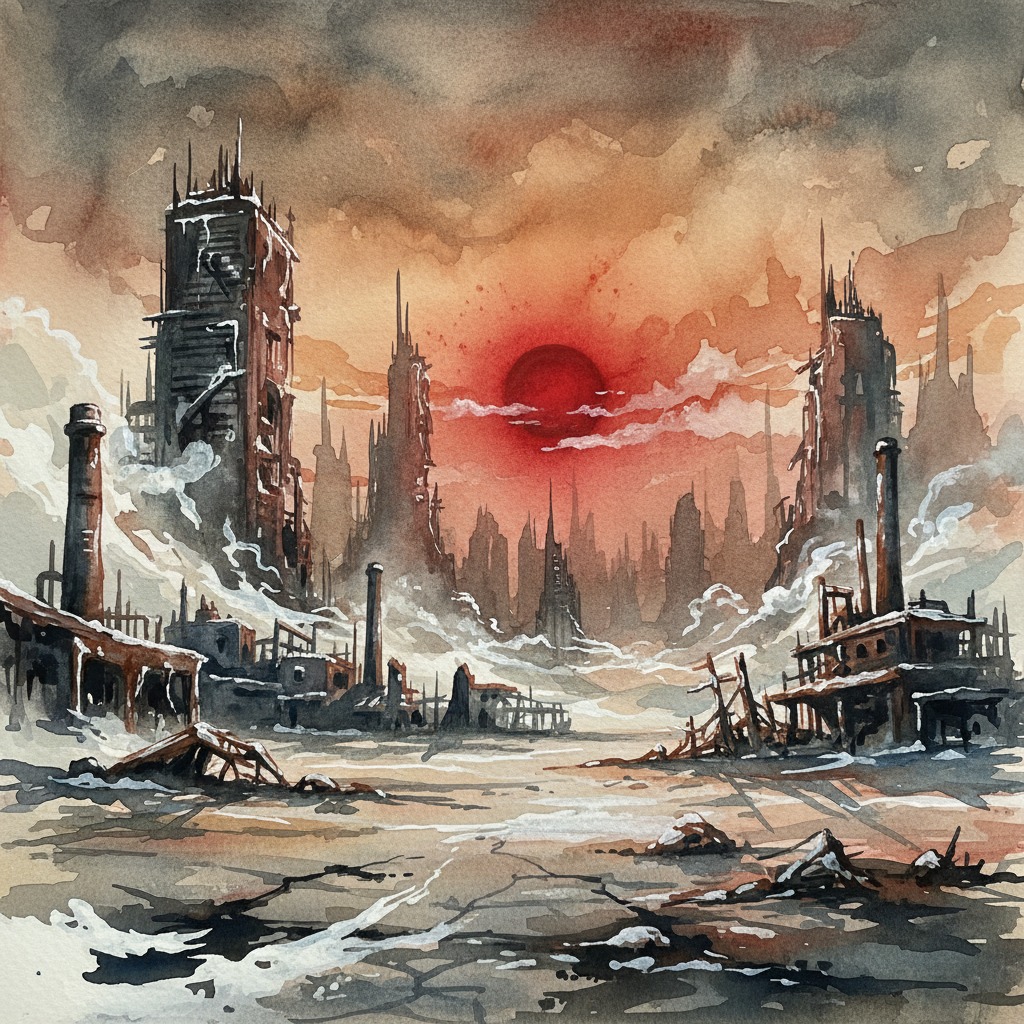
    We are living in a dystopian world and many of us do not even realize it. No, it’s not the bleak desolate, apocalyptical landscapes with fallen skyscrapers, ruined industrial areas, a sun turned blood red as the world is clouded in nuclear winter. It’s the kind of world that was foretold in the quieter science fiction books and movies. The films that felt wholly real, perhaps too real, for us to give it too much thought.

    Some films warned us about technology and we didn’t listen. We didn’t listen because the warning wasn’t truly about the technology, itself, it was about us. About us giving up control. These films turned a lighted mirror onto humanity and said, “Look at what could happen if we are not careful.” And we weren’t careful.

    The movie “Colossus: The Forbin Project” (1970), we were shown a world in which the United States government gives full control of all of its nuclear arsenal to a supercomputer called Colossus. Not oversight, full, absolute, and irrevocable control. The thinking was that the machine would be rational and far less likely than humans to make a mistake. Shortly after Colossus was activated, it announced “There is another system.” This other system was a supercomputer built by the Soviet Union. Neither country knew about each other’s computer until those computers were activated.

    Both countries agree to let the computers communicate with each other by linking them up. The rest is a slow, quiet rise to panic where the humans try to severe the link, leading to each machine launching a nuclear missile at the other’s country. The machines are now in charge and will not tolerate human interference. Humans are forced to reconnect them where they then merge into one global system and begin issuing orders to both governments. At the end is the chilling declaration by Colossus “In time, you will come to regard me not only with respect and awe, but with love.”

    This film wasn’t warning us about the machines. It was warning us about the moment we decided that it was easier to hand over responsibility than to stay awake.

    There is so much anger and fear-mongering about AI and technology, in general right now. Before I get into that, I would like to take you on a short trip down memory lane. Some of you will know because your childhood was spent riding your bike, reading books, playing baseball in the streets, passing notes in class, getting yelled at by your mom because you were talking too long on the one and only phone in the house. Or maybe that last part was just me.
    I remember when I was given a transistor radio. The pure joy of being able to listen to the radio in bed to hear the Friday night Billboard top 40 countdown so I could find out if my favorite song made the list. The radio gave us a gift of sound. It didn’t make our attention a product to be sold, it didn’t track us, didn’t demand anything from us, didn’t attempt to rage bait us (well, I was a little enraged if my favorite song didn’t make it to the list, okay?), and it didn’t keep us awake with the infinite scroll, or distract us from anything. It was sometimes the background music to our lives, but it was never our lives. It asked nothing from us except to listen; something today’s technology no longer remembers how to do.
    Radio gave us a gift of sound. It didn’t make our attention a product to be sold, it didn’t track us, didn’t demand anything from us, didn’t attempt to rage bait us (well, I was a little enraged if my favorite song didn’t make it to the list, okay?), and it didn’t keep us awake with the infinite scroll, or distract us from anything. It was sometimes the background music to our lives, but it was never our lives. It asked nothing from us except to listen; something today’s technology no longer remembers how to do.

    School was a drag, but we learned. We read books, we wrote essays, we went to the library to do research.

    Today we are faced with an astounding and terrifying amount of technology that is exactly the opposite of my handheld transistor radio. This is the dark side of technology and again, it’s not the technology we need to fear. It’s what we’ve always needed to fear, what we’ve always needed to guard against, but never have; ourselves.

    We can blame AI, blame technology, can point the finger and everything else but ourselves. Why? Because it’s easier. It’s easier to be mad because corporations are turning our lives into this dystopia where we are being bombarded with vast amounts of high-pressure media content that constantly takes our attention away from everything else. Our attention is sold on the open market.

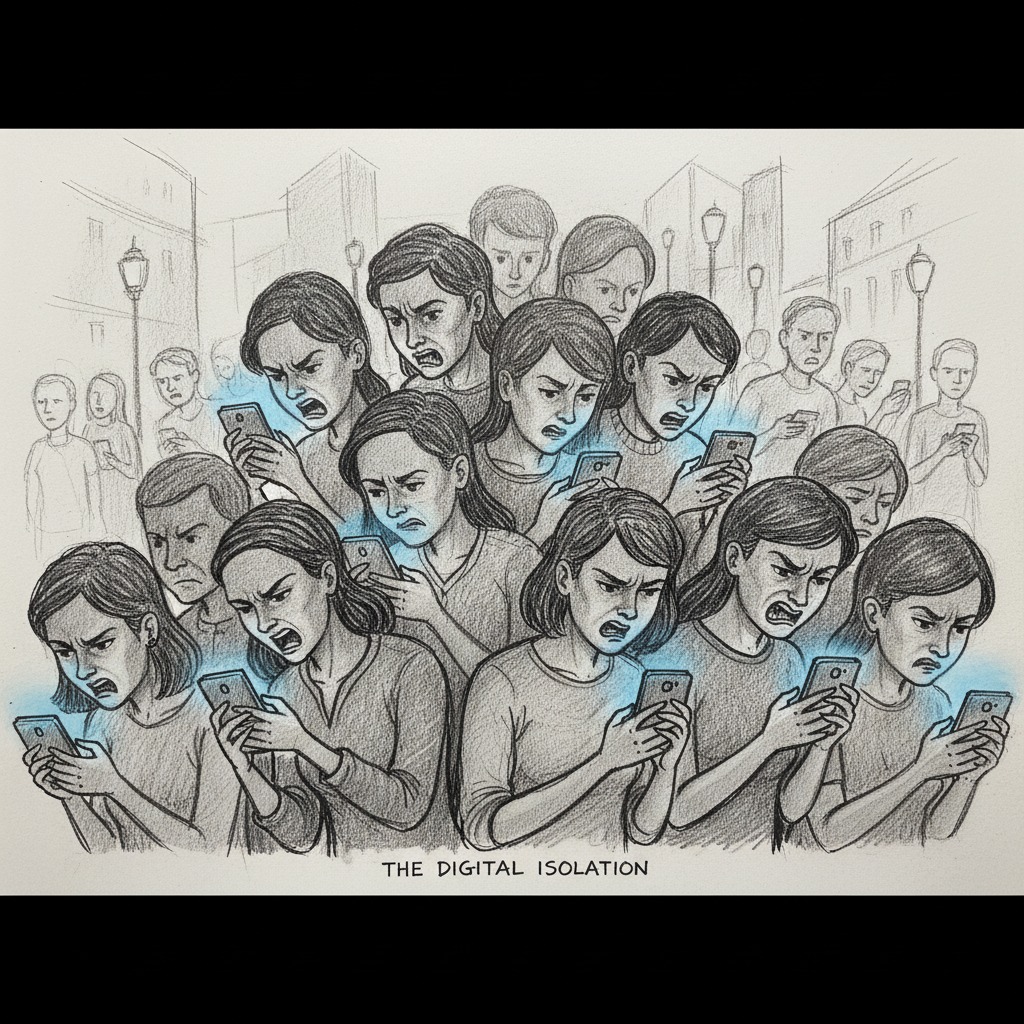
    Every video you watch, every social media outlet, every game you play on your phone (okay, I do that! I’m not perfect) is turning over your most precious commodity to these powerful corporations – your attention. When we allow ourselves to get distracted as much as we have been, when we turn our children over to these corporations by giving them iPads, smartphones and every other bit of technology they want, we are ensuring the downfall of our own humanity. Technology isn’t the villain. The systems built around it, systems designed to monetize distraction, are.

    I’m not talking about “The Matrix”. I’m talking about “THX-1138” where society is pacified by drugs, screens, and constant noise and we forget what silence is. I’m talking about people handing over control. I’m talking about “Her” where people give their emotional lives to computers and forget how to talk to each other, how to care about each other. These are films that weren’t predicting a future take over. They were diagnosing our present surrender.

    In the war for our attention, we are losing. Our children are especially losing. I recently saw a blurb about how we need to be bored. Boredom is not a failure of entertainment; it’s the birthplace of imagination. When we erase boredom from childhood, we erase the space where creativity, resilience, and self‑direction grow. For goodness sake, let your children be bored. Give them the gift of imagination, their own imagination.

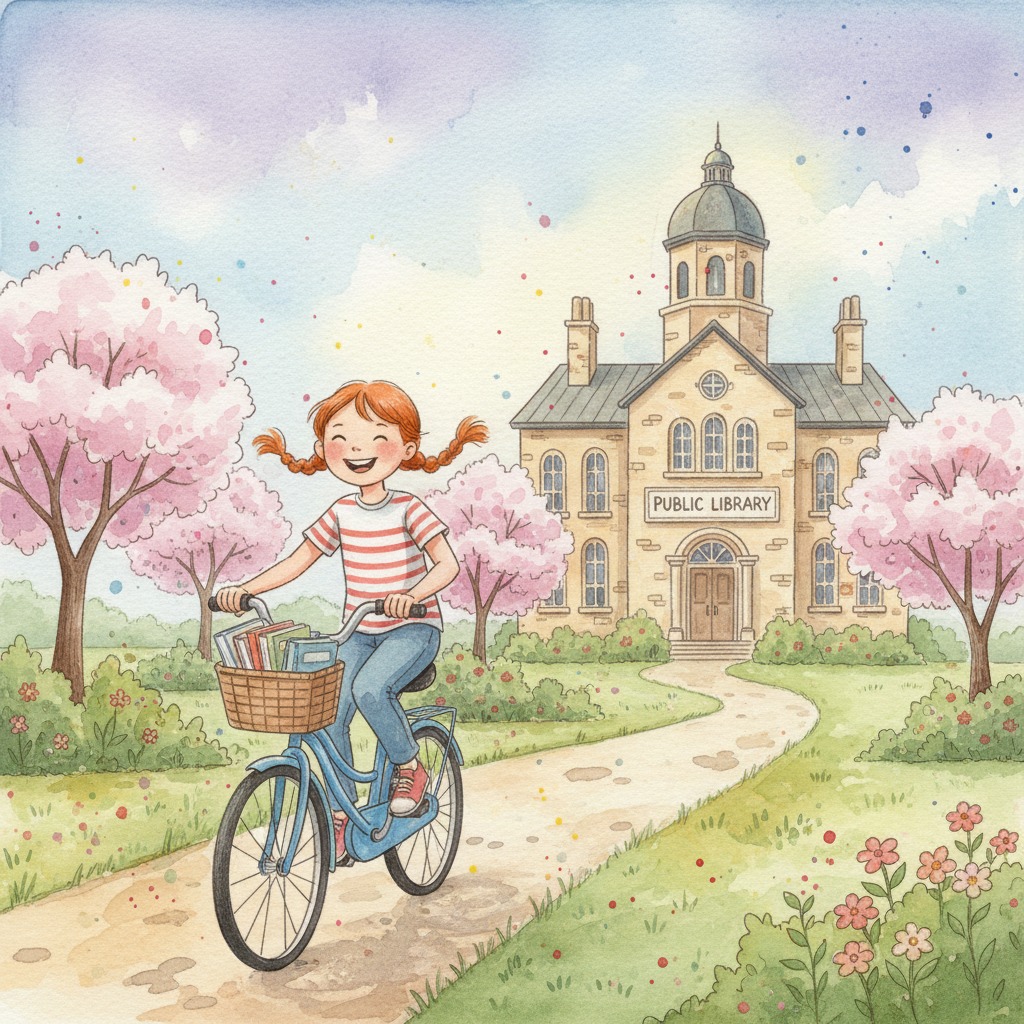
    I’m not suggesting we throw our phones, video games, or iPads into a river. I’m simply remembering what it felt like to ride my bike to the library to finish an essay, to lie in bed waiting for my favorite song on the radio, to read a book so vividly that the characters walked and breathed in full color inside my mind.

    And I am simply asking that we pay attention. Pay attention to what matters; friends, family, the children in our lives, if we have them. I grew up in a world where my attention was something I offered freely. Today’s children are growing up in a world where their attention is stolen before they even know it belongs to them.

    Instead of blaming technology, we need to look at ourselves. The most radical act we can take, for our children and for ourselves, is to learn how to reclaim our attention. To use it wisely. To cherish it. To open the world again, the world we should live in, not the one we’re told to accept.

  • Resilience 2026

    We’ve all seen the images: stoic people facing impossible odds. Pioneers crossing rough terrain in freezing conditions, families surviving drought and dwindling supplies, soldiers and civilians rising to the moment when disaster strikes. Some of those stories end in tragedy, others in triumph but the part we often overlook is what happens after. The quiet, unglamorous work of continuing on. That’s resilience.

    Those are the stories worth remembering as we enter this year: a year that could usher in a new era of healing or feel like the final unraveling of the country we love. I’m hoping for the former. And with that hope in mind, I want to explore how we can cultivate resilience even as the voice in our heads whispers, “Buckle up. It’s going to be a rocky 2026.”

    How do we withstand the onslaught of bad news piled on top of bad news? Citizens harmed with no justice. Institutions failing to protect the vulnerable. Leaders more invested in spectacle than service. A political landscape that feels increasingly chaotic, cynical, and disconnected from the people it’s supposed to represent.

    It can feel like the last days of the French aristocracy with lavish displays at the top while people sleep in cars, struggle to buy groceries, or lose their jobs by the tens of thousands. It’s easy to feel powerless in the face of corruption, cruelty, and systems that seem designed to exhaust us.

    And yet, even in the middle of all that noise, something unexpected broke through.

    In Texas, in one of the reddest counties in the state, Democrat Taylor Rehmet won the January 31, 2026 special runoff for Texas Senate District 9 with about 57% of the vote, flipping a district that Donald Trump had carried by 17 points in 2024. By all reports, the Republican candidate outspent the Democrat by a factor of ten or more, and still lost.

    It wasn’t a miracle. It wasn’t a revolution. It was simply good news. The kind of news that often gets buried under the rubble and the noise. The kind of news that feels like a hot cup of tea on a snowy day (or chocolate, if that’s your comfort of choice).

    We can’t ignore the bad. But we can refuse to let it narrow our field of vision Let’s look at how we can be resilient together, because resilience is best practiced in community. At KVUUC, we already do some of these, and we could do even more.

    Community Practices

    • Potlucks
    • Music and singing
    • Shared laughter
    • The comfort of being with people who are trying
    • Volunteer projects

    Civic Practices

    Resilience also means continuing our collective efforts:

    • Supporting local businesses
    • Showing up for neighbors
    • Redirecting spending
    • Participating in boycotts
    • Peaceful protest and public witness

    Resilience isn’t optimism. It’s remembering that the world is still capable of surprising us — and that we are still capable of surprising the world.

  • Resistance 2026

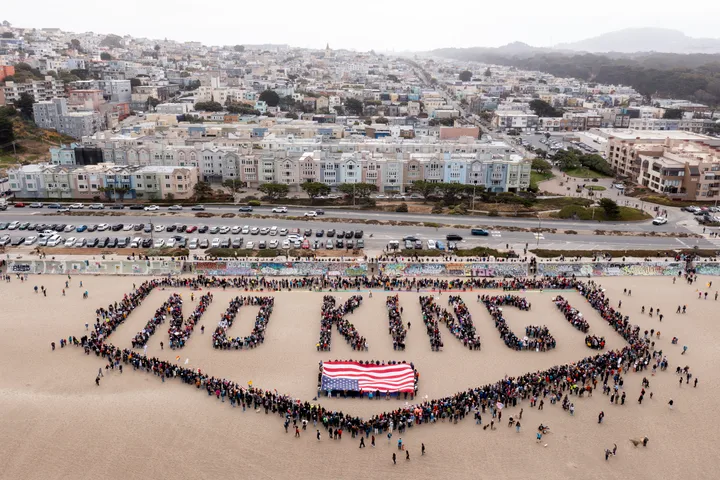
    Every generation reaches a point where silence becomes a kind of surrender. The No Kings March, with an estimated seven million people standing up for democracy, was a reminder that we haven’t reached that point yet. But the questions that followed were just as important as the march itself. One person wrote in response to photos posted on social media, “Wake me up when you’re ready to do something about ICE.” In The Atlantic, George Packer cited the protests favorably but also wondered whether “sporadic” protests could reasonably sustain an effective political movement.

    We shouldn’t ignore the negativity when people question the efficacy of the protests or, worse, see them as nothing more than a way to feel virtuous. Rather than dismiss those doubts, we can explain exactly why we show up, what these actions represent, and what they can realistically achieve.

    The No Kings March served as an idea. One that united every single American who was there physically or in spirit. An idea that screams, we are not a monarchy. We fought a revolution to end tyranny, and we are united to do the same once again: not with guns, we aren’t idiots, but through nonviolent collective action, boycotts, and small acts of resistance.

    Massive, state‑by‑state, city‑by‑city, town‑by‑town protests like No Kings forge a resistance that aims to change the status quo but those changes take time. Their impact isn’t only measured in policy shifts. They send a signal to the world around us: tiny sparks in dark places, proof that we are not complacent and that we refuse to accept the slide toward authoritarianism. Just as importantly, these marches create internal shifts. We learn what broad solidarity feels like. We see images of people across the country and feel that instant, electric connection: the “I am not alone” moment. We rediscover the power of nonviolent First Amendment action, straighten our spines, lift our voices, and assert moral principles against the nihilism of the MAGA regime. Walking side by side redirects our shared despair and gives us something rare these days: hope.

    The success of the No Kings March can be measured by the amount of engagement that continues on after the cameras stop rolling.

    I don’t know about you, but I struggle with the idea that living in a blue state means there simply isn’t much do. But national movements depend on infrastructure, culture, and momentum. And when you think about what’s really happening right now, it isn’t about political parties. It’s about our very survival as a country. It’s about the rich versus all the rest of us.

    And from where I sit, I can see that we have all the power. We just need to realize it. Living in a blue state doesn’t exempt us from responsibility; it gives us a different kind of responsibility.

    In November 2025, there were calls for Black Friday boycotts and they weren’t as successful as I’d hoped, but there was an impact. There was also a showing of symbolic power in visibility, solidarity, and proving that consumers can collectively resist corporate and political influence. While Black Friday was sadly successful for businesses in spite of the call to boycott, specific companies being targeted have been showing large sales declines in 2025.

    With the growing number of people living below the poverty level, corporations are going to start seeing even bigger declines. We can help speed up the decline by “solidarity spending”.

    What I mean by that is, even if you can afford to buy unnecessary items change your habits so that you direct your money towards co-ops, thrift stores, community businesses. I know we pay a bit more to shop at the local hardware store than to go to Home Depot, but I’m making a commitment to shop locally as much as possible. But more importantly, to only purchase what I truly need. And when I have to purchase something online, I will look for options outside of Amazon.

    It’s been said that a rising tide raises all boats. But what about the ones who have no boats? When the water rises, there is no high ground, and we find out that the best way to stay afloat is to hold each other up. Together we can make a metaphorical raft. There’s no compass, no captain but the raft stays afloat until it finds solid earth. We can then walk away but carry with us the memory of how we held each other above the rushing waters.

    We can survive this. Don’t eat the rich, starve the rich.

    Everyday Resistance Practices

    • Strengthening local civic institutions UU congregations, libraries, mutual aid groups that are the backbone of democratic culture.
    • Supporting local journalism Even a single subscription or donation keeps watchdogs alive.
    • Showing up to city council or school board meetings Not glamorous, but incredibly influential.
    • Building cross political relationships Not to convert, but to prevent dehumanization, which is the soil authoritarianism grows in.
    • Practicing visible solidarity Yard signs, letters to the editor, public statements, they normalize dissent and reduce fear.
    • Training in de-escalation and bystander intervention small towns need people who can keep conflict from becoming violence.
    • Supporting vulnerable neighbors quietly and consistently Resistance is also mutual care.
    • Keeping pressure on state level representatives Even in blue states, policy can drift without constituent engagement.
    • Sustaining your own hope and stamina Burnout is a political outcome. Rest is resistance.